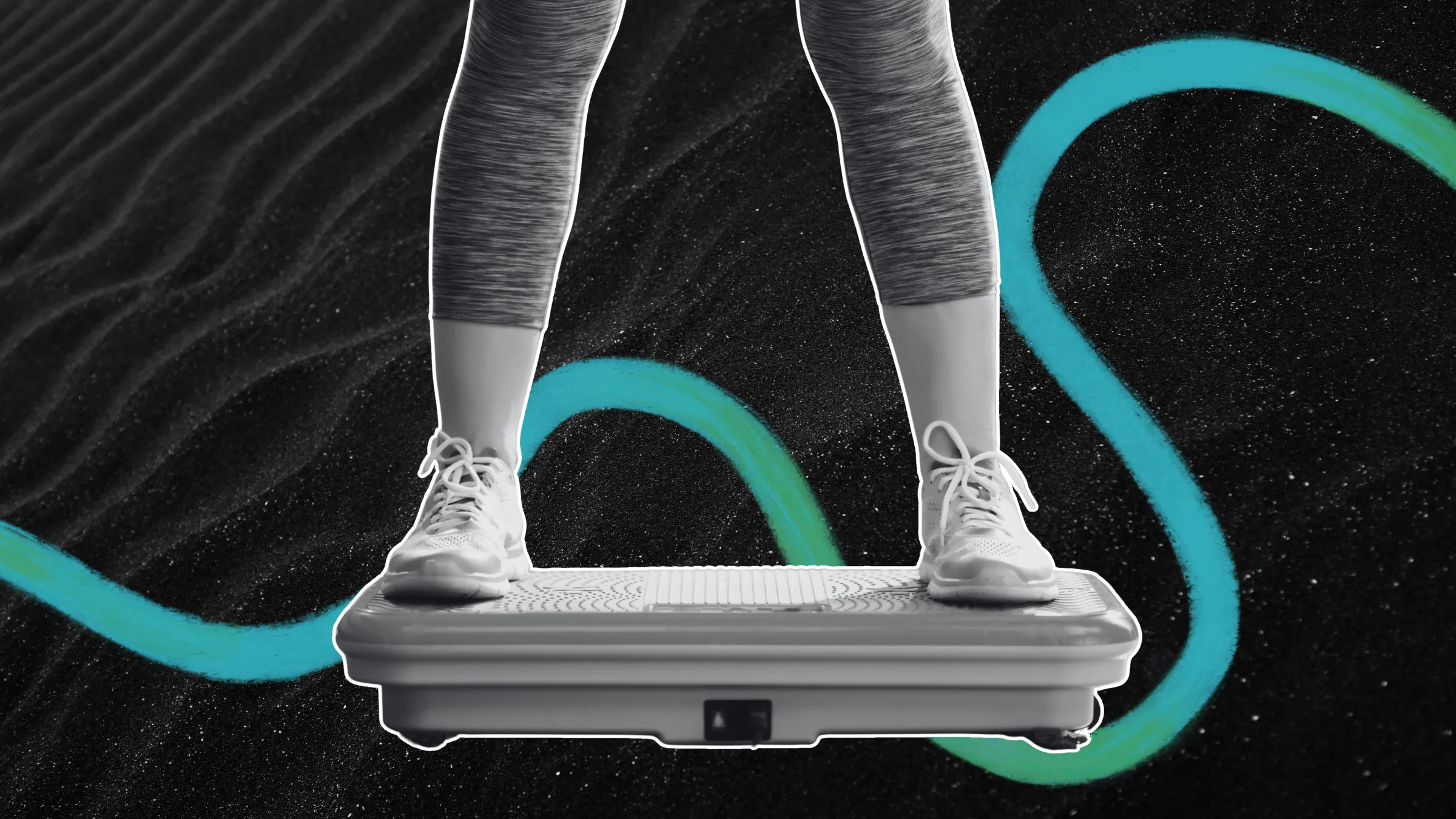
Take a scroll through #FitTok in 2025, and there’s a strong chance you’ll come across someone squatting, stretching, or standing on a small shaking board—aptly named a vibration plate. Some users swear by the tool’s ability toimprove body compositionor aid inmuscle recovery, but are those claims legitimate? Experts thatOutsidespoke with break down the fitness trend.
No gatekeeping: this is how I use my vibration plate to feel my best so you can too 💛 Comment “VIBE” if you want the 🖇️ to mine!! I can confirm — the vibration plate is DEFINITELY worth the hype!! I’d recommend everyone to get one, it’s one of the easiest, most effective ways to support lymphatic drainage and release your limbs daily. Plus, it’s way more cost-effective than weekly lymphatic massages. I use it for everything from leg sculpting to post-workout recovery, and it seriously makes such a difference in how light, energized, and de-puffed I feel. I’ve been using my daily for two weeks and have already noticed the difference. If you’ve been debating getting one, take this as your sign. Outfit: Vibration plate:
What Are Vibration Plates?
Steven Haahr, a certified personal trainer, explains that vibration plates are tied to a health concept called “whole body vibration,” in which a person stands on “platforms that oscillate, or shake, at adjustable frequencies and transmit mechanical vibrations through the body,” he toldOutside.The vibration causes your muscle fibers to rapidly contract and relax. “They’re intended to enhance neuromuscular activation, balance, and circulation,” he explains.
Haahr says that people who are pregnant or have a health issue (either an injury or an existing condition, particularly a heart-related one) might want to avoid using the device unless a doctor clears them.
Are They Effective at Burning Fat and Building Muscle?
There’s actually quite a bit of data to support the health perks of vibration plates, saysJohn Gallucci Jr., a physical therapist and owner of JAG Physical Therapy, a physical and occupational therapy practice based in New Jersey. “Vibration plates offer benefits such as improved muscle strength and enhanced circulation,” he said toOutsidein an interview.
A2021 researchstudy suggests that vibration plate training can improve muscle strength in older adults.Researchers in 2017found that the tool could help boost balance and coordination in people 55 and over. Another2014 studyfound that three months of vibration plate training resulted in reduced arterial stiffness—a key indicator of heart-disease related death later in life. (There’s actuallyquite a bit of researchto support the idea that whole body vibration training helps the heart.) That said, most research on whole body vibration benefits focuses on older adults; more studies in younger populations are needed to provide a more comprehensive view of the effectiveness of vibration plates.
A vibrating plate isn’t going to burn fat, Gallucci points out. “To burn fat, you need to expend calories and elevate your heart rate,” he explains. “Using vibration plates in your workout can help do both of those, but they work best as a supplemental tool.”
The same concept applies to building muscle, Haahr adds, as vibration plates can help prime your muscles to lift heavy. “Vibration plates are not a replacement for resistance training, but they can enhance muscle activation when combined with strength exercises,” Haahr says.
Of course, if you just want to stand on the plate, Gallucci says, “it can help you recover from exercise, improve your balance, and improve blood circulation.”
How to Use a Vibration Plate for Optimal Benefits
For the average person trying to change their body composition, a vibration plate should be used as a supplemental to your regular workout routine, both Haahr and Gallucci say.
For example, you could do some exercises on a vibration plate as part of yourwarm-up, such as five to ten minutes of air squats, lunges, or calf raises, says Haahr. They can also be used on recovery days for balance work, Haahr explains (think: a few sets of unilateral exercises, like single-leg deadlifts, or slow marches in place). The goal in both of these scenarios is to stimulate the heck out of your muscles.
Again, you can always just stand on the plate for the vibes (quite literally). “Excessive duration or high intensity use may lead to muscle soreness, muscle strain, or joint irritation. It’s best to use them for just ten to 20 minutes a day, two to three days a week,” Gallucci recommends.
Want moreOutsidehealth stories?Sign up for the Bodywork newsletter. Ready to push yourself? Enter MapMyRun’sYou vs. the Year 2025running challenge.